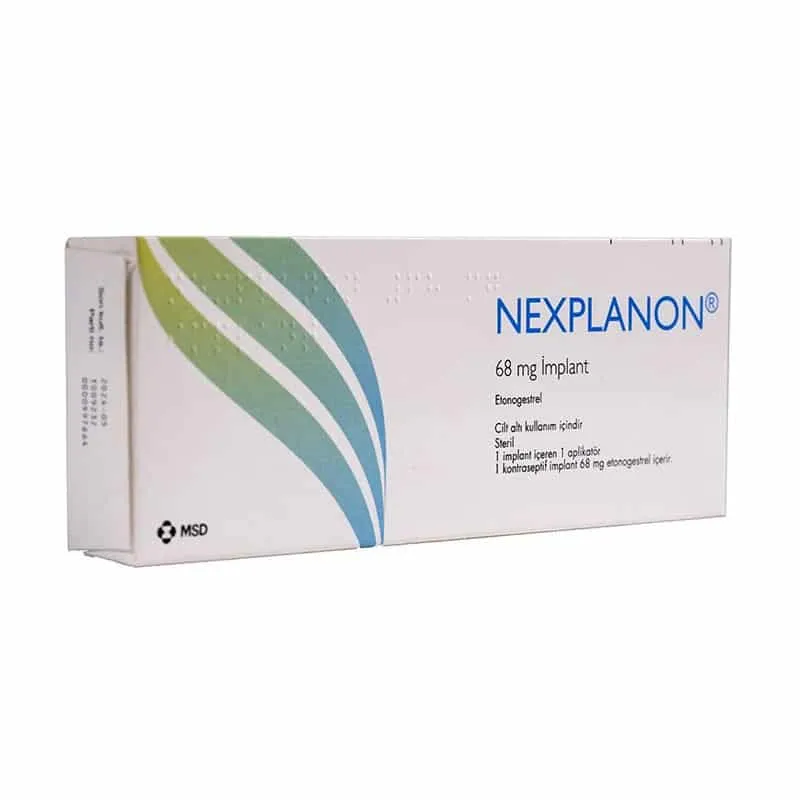
Manufactured by Organon (a subsidiary of Merck & Co.), NEXPLANON is one of the most reliable long-acting reversible contraceptive (LARC) methods, providing continuous protection without the need for daily pills or monthly injections.
At MedicarePharm, we offer authentic Nexplanon implants with professional guidance, ensuring safe insertion and removal by licensed healthcare providers across the U.S., U.K., and Europe.
⚕️ Indication
NEXPLANON is indicated for the prevention of pregnancy in women of reproductive age. It is a progestin-only contraceptive and does not contain estrogen, making it suitable for women who cannot tolerate combined hormonal pills.
💡 Effective for up to 3 years and easily reversible—fertility typically returns within 2 weeks after removal.
🩺 How NEXPLANON Works
NEXPLANON prevents pregnancy through three primary mechanisms:
1️⃣ Prevents ovulation – stops the ovaries from releasing an egg.
2️⃣ Thickens cervical mucus – makes it harder for sperm to reach the egg.
3️⃣ Thins the uterine lining – reduces the likelihood of implantation.
Once inserted under the skin, the implant continuously releases a low, steady dose of etonogestrel, maintaining contraceptive efficacy throughout its lifespan.
💉 Administration and Duration
Insertion Site: Subdermal (inner side of the upper, non-dominant arm).
Duration: Effective for up to 3 years.
Insertion: Must be performed by a trained healthcare professional.
Replacement or Removal: Can be done anytime if contraception is no longer desired.
⚕️ The implant is about the size of a matchstick and should be palpable under the skin immediately after insertion.
⚠️ Important Safety Information
🚫 Contraindications
Do not use NEXPLANON if you:
Are pregnant or suspect pregnancy
Have a history of blood clots (thrombosis or embolism)
Have liver disease or liver tumors
Have undiagnosed vaginal bleeding
Have or have had breast or progestin-sensitive cancer
Are allergic to etonogestrel or any implant components
⚕️ Warnings and Precautions
🩸 Menstrual Changes
Irregular, prolonged, or absent bleeding is common, especially during the first year. These changes are not harmful but may be unpredictable.
🫀 Thrombotic & Vascular Events
Although rare, blood clots (deep vein thrombosis, pulmonary embolism, or stroke) have been reported. The implant should be removed if thrombosis occurs or before long-term immobilization (e.g., major surgery).
🤰 Ectopic Pregnancy
If pregnancy occurs while using NEXPLANON, there is a small risk that it may be ectopic (outside the womb). Immediate medical evaluation is necessary if lower abdominal pain occurs.
🌿 Ovarian Cysts
Small ovarian cysts may occasionally form but usually resolve without treatment.
💗 Mood and Mental Health
Monitor for symptoms of depression or mood changes. Seek medical advice if significant emotional changes occur.
🩺 Insertion and Removal Risks
Improper placement can lead to implant migration, deep insertion, or difficult removal. Only certified professionals should perform these procedures.
💬 Common Side Effects
Mild to Moderate (usually temporary):
Irregular or unpredictable bleeding
Headache or mild migraine
Acne or oily skin
Weight gain or appetite changes
Breast tenderness or pain
Abdominal discomfort
Mood swings or mild depression
Rare but Serious:
🚨 Blood clots (thrombosis or embolism)
🚨 Severe depression or suicidal thoughts
🚨 Jaundice or liver issues
🚨 Allergic reaction or implant migration
Most side effects improve over time as your body adjusts to the implant.
🔬 Drug Interactions
Certain enzyme-inducing medications may reduce NEXPLANON’s effectiveness, including:
Antibiotics: Rifampicin, Rifabutin
Anticonvulsants: Carbamazepine, Phenytoin, Topiramate
HIV/HCV medications: Ritonavir, Nevirapine
Herbal remedies: St. John’s Wort
Women using these medications should use backup contraception during treatment and for 28 days after stopping the interacting drug.
👩🍼 Use in Special Populations
Pregnancy: Do not use if pregnant.
Breastfeeding: Small amounts of etonogestrel may pass into breast milk but have not been shown to harm infants or milk production once lactation is established.
Adolescents: Safe for post-pubertal teens; not recommended before menarche.
Obesity: Effectiveness may be reduced in women over 130% of ideal body weight; discuss with your healthcare provider.
🌸 Return to Fertility
After removal, normal ovulation can resume within 7–14 days, and pregnancy is possible within the first cycle. If continuous protection is desired, another contraceptive method should begin immediately after removal.
🌟 Why Choose NEXPLANON from MedicarePharm
💯 Authentic Organon-manufactured implant
👩⚕️ Certified insertion and removal support
🔒 Private, secure, and professional service
🚚 Fast and discreet worldwide delivery (U.S., U.K., Europe)
💬 Expert contraceptive guidance from licensed specialists
At MedicarePharm, we help women take control of their reproductive health with trusted, long-acting, reversible birth control solutions — discreetly and professionally.